How to Choose Basement Epoxy Floors (5 Checks)
Basement epoxy floors can perform well in damp-prone spaces when installers first identify moisture sources, test the concrete, and prepare the slab correctly. Testing reveals vapor or water problems that could cause blistering or delamination, while grinding, crack repair, joint treatment, and mitigation give the coating a clean, stable surface to bond with.
Why does basement moisture matter for epoxy floors?
Concrete may look dry while still transmitting water vapor from the soil below. Basements are especially vulnerable because slabs can sit below grade, near groundwater, or alongside walls that experience seasonal moisture pressure. A coating installed over that pressure can trap vapor beneath the finish.
As vapor moves upward, it can create:
- Blisters or bubbles
- Peeling and delamination
- Cloudy or discolored areas
- White powdery deposits called efflorescence
- Cracks that return through the coating
Epoxy is not a waterproofing system for an actively leaking basement. If water enters through walls, floor cracks, plumbing, or poor drainage, those issues should be corrected before choosing a decorative floor coating. A dry-looking slab still deserves testing before installation.
What does moisture testing for basement epoxy floors involve?
A professional assessment uses more than a quick visual inspection. The appropriate test depends on the slab, the coating system, and the suspected source of moisture.
Common evaluation methods include:
- Visual inspection: The installer looks for damp areas, staining, efflorescence, failed paint, cracks, joints, and wall-to-floor seepage.
- Plastic sheet screening: A taped plastic sheet can indicate obvious vapor activity, although it is not a complete measurement.
- Relative humidity testing: In-situ probes measure moisture conditions inside the slab, where surface readings may not tell the full story.
- Calcium chloride testing: This evaluates moisture vapor emission at the surface when the selected system calls for that method.
- Water-source investigation: Grading, gutters, downspouts, plumbing, sump systems, and foundation drainage may all affect the floor.
The goal is not simply to label a basement “wet” or “dry.” The goal is to determine whether conditions fit the manufacturer’s requirements for the selected epoxy, polyaspartic, or other coating system.
How should a concrete basement floor be prepared?
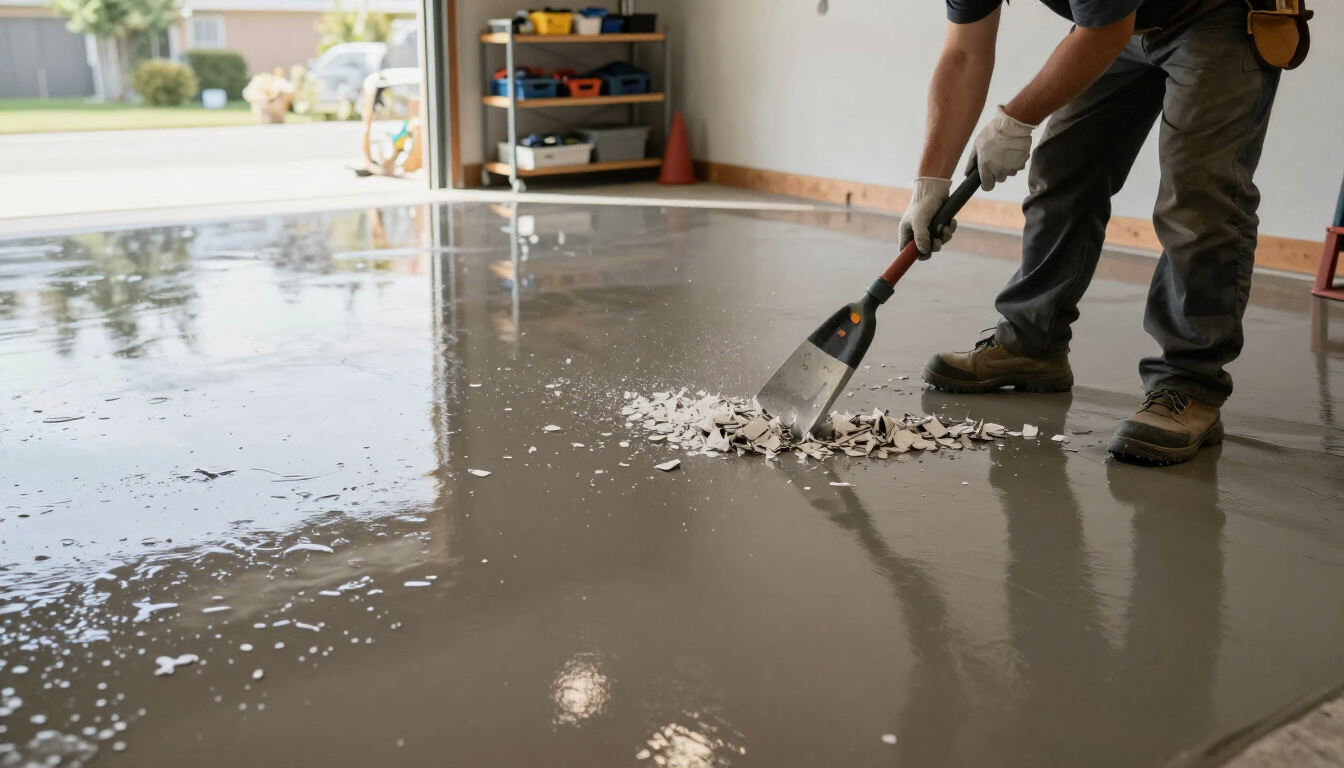
Preparation is the part of basement epoxy flooring that most directly affects long-term adhesion. Cleaning alone is rarely enough because concrete pores may contain paint residue, oil, curing compounds, weak cement paste, or previous coatings.
A durable preparation process may include:
- Removing paint, adhesive, dust, grease, and loose material
- Mechanically grinding the concrete to open the pores
- Vacuuming with appropriate dust-control equipment
- Filling cracks and repairing damaged areas
- Treating construction joints and control joints appropriately
- Addressing high or low spots that could affect appearance and coverage
- Confirming the slab is clean, sound, and within moisture limits
Grinding is generally preferred over aggressive chemical cleaning because it creates a consistent mechanical profile. The finished surface should accept the primer or base coat evenly rather than leaving glossy, contaminated, or weak patches.
For a broader look at the installation process, see Concrete Basement Epoxy Floor Installation . Homeowners comparing other residential applications can also review Residential Epoxy Flooring Installation .
Can epoxy fix a damp basement?
No. Epoxy can improve the usability, cleanability, and appearance of a properly managed basement, but it cannot correct active water intrusion or severe vapor pressure by itself.
Before coating, investigate:
- Foundation wall leaks or hydrostatic pressure
- Plumbing leaks and condensation
- Sump pump performance and backup protection
- Gutters, downspouts, and soil slope near the foundation
- Missing or damaged drainage systems
- Cracks that allow liquid water to enter
Moisture mitigation may be appropriate in some projects, but the solution must match the source and the coating manufacturer’s specifications. In some cases, the right decision is to postpone coating until drainage or waterproofing work is complete.
Which coating is best for a basement floor?
The best coating depends on moisture conditions, expected traffic, appearance goals, and the installation environment. Epoxy provides strong adhesion and a broad range of colors, flakes, and decorative effects when installed over a suitable slab. Polyaspartic systems can offer fast return-to-service and strong resistance, but they still require correct preparation and moisture control.
Consider these factors:
- Epoxy: A practical option for many controlled interior environments, with substantial design flexibility.
- Polyaspartic: Useful when faster installation or specific chemical and abrasion resistance is important.
- Flake systems: Add texture, visual variation, and a more forgiving appearance for everyday dust.
- Solid-color systems: Create a simpler, cleaner visual field for finished rooms or utility areas.
- Anti-slip finishes: Worth considering where water, laundry activity, or smooth footwear could create a slip concern.
Explore Polyaspartic Floor Coating and Anti-Slip Floor Coating when comparing system characteristics. The final recommendation should follow testing rather than a generic promise that one coating works for every basement.
What should homeowners ask before installation?
A useful consultation should explain both the coating and the condition of the slab. Ask the installer:
- What moisture test will be used, and what were the results?
- Where is moisture coming from, if any is detected?
- How will the slab be mechanically prepared?
- How will cracks, joints, and damaged concrete be treated?
- What happens if the floor fails the moisture requirements?
- Which primer, base coat, broadcast material, and topcoat are specified?
- How long must the floor cure before foot traffic, furniture, or storage?
- What maintenance and warranty conditions apply?
A clear answer should connect each recommendation to the actual basement rather than relying only on product names or thickness claims.
A practical basement coating checklist
Before scheduling a basement epoxy floor, confirm that:
- Active leaks and drainage issues have been addressed.
- Moisture testing has been completed and documented.
- The slab will be mechanically profiled, not merely mopped.
- Cracks, joints, and weak concrete have a repair plan.
- The coating system matches the measured conditions.
- Cure times and maintenance requirements are understood.
A finished basement floor can become a cleaner, more useful surface for storage, exercise, hobbies, laundry, or family space. The result depends less on covering concrete quickly and more on controlling the conditions below the coating.
The bottom line
Basement epoxy floors are a strong option when the concrete is sound, moisture is understood, and preparation is thorough. Testing helps identify vapor or water problems before they become coating failures; grinding and repairs provide the bond and stability the system needs. Epoxy or polyaspartic may both be suitable, but the right choice depends on the slab, room use, and installation conditions. Before deciding, evaluate drainage, request documented moisture testing, compare the proposed coating system, and confirm the preparation steps. If the basement is actively wet, correct that problem first rather than expecting a coating to hide it.


