
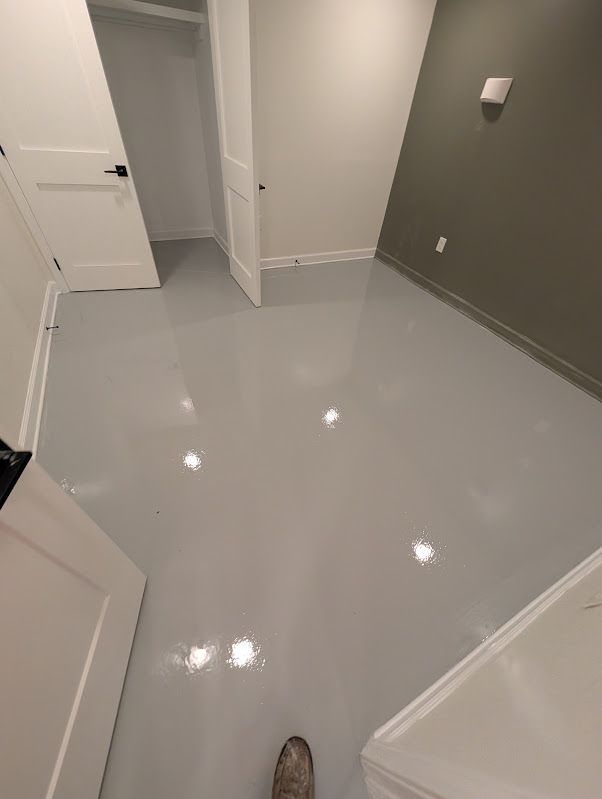
Can You Epoxy Over a Cracked Concrete Slab? (9 Ways)

September 30, 2026

Share this article

Yes, you can epoxy over a cracked concrete slab, provided the cracks are structurally stable and properly repaired. Simply pouring epoxy won't hide cracks; they must be chased, cleaned, and filled with high-modulus resin before the coating system is applied to prevent "telegraphing" through the finished floor surface.

Why does my concrete slab have cracks?

Before we even talk about Residential Epoxy Flooring Installation , we have to understand the nature of the concrete itself. Concrete is essentially a giant, rigid sponge. It is incredibly strong under compression but quite weak under tension. Cracks are the concrete's way of relieving stress. In the Upstate, especially around Greenville and Greer, our red clay soil can shift significantly with the seasons. This movement creates tension in the slab that leads to cracking.

There are generally three types of cracks we see during a site evaluation:

  • Shrinkage Cracks: These happen during the curing process when the water evaporates and the slab shrinks. They are usually fine, "hairline" cracks.
  • Settlement Cracks: These occur when the ground beneath the slab wasn't compacted correctly or when water washes away the sub-base. These are more serious and often involve one side of the crack being higher than the other (heaving).
  • Expansion/Stress Cracks: These are caused by temperature swings. Concrete expands in the humid South Carolina summer and contracts in the winter. If expansion joints weren't cut deep enough, the concrete will find its own place to break.

When we look at a Garage Floor Epoxy Coating project, our first job is to determine if those cracks are "active." If the slab is still moving, a rigid epoxy might crack again in the same spot. That’s why the prep work is more important than the actual paint.

Can epoxy flooring actually hide existing cracks?

This is a common misconception. Many homeowners think that because epoxy is thick, it will act like a self-leveling filler that hides every imperfection. In reality, epoxy is a "film-forming" coating. If you have a crack in your concrete and you just roll epoxy over it, the air trapped in the crack will likely cause bubbles (outgassing), or the epoxy will simply sink into the void, leaving a visible indentation. Even worse, if the crack moves just a fraction of a millimeter, the brittle epoxy on top will snap, mirroring the crack below.

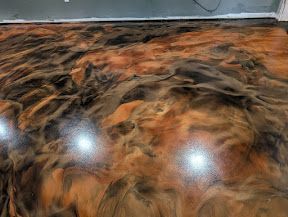
To effectively hide cracks, we use a multi-step repair system. This is especially critical for Metallic Epoxy Flooring , where the flow of the pigments can be interrupted by even the smallest surface deviation. The goal isn't just to cover the crack, but to make the floor structurally monolithic—essentially turning two pieces of concrete back into one.

The Step-by-Step Process for Repairing Cracks

Repairing a slab for a Basement Concrete Epoxy Floor Installation involves much more than just squeezing some caulk into a hole. We follow a strict industrial protocol to ensure the repair lasts as long as the house does.

  1. Mechanical Chasing: We use a diamond-blade "crack chaser" or a small grinder to open the crack into a "V" or "U" shape. This removes loose debris and creates more surface area for the repair resin to bond to.
  2. Industrial Vacuuming: Dust is the enemy of adhesion. We use HEPA-filtered vacuums to suck out every grain of sand and dirt from the chased crack.
  3. Filling with High-Modulus Resin: We don't use hardware-store wood filler. We use two-part epoxy pastes or rapid-set polyureas. These materials are designed to be harder than the concrete itself once cured.
  4. Flush Grinding: Once the filler is hard, we grind it flat with the rest of the slab. When you run your hand over it, you shouldn't be able to feel where the crack was.
  5. Full Substrate Grinding: Finally, the entire floor gets a pass with a planetary diamond grinder. This opens the "pores" of the concrete so the Polyaspartic Floor Coating or epoxy can soak in and bite.

When is a concrete slab too damaged for epoxy?

Not every floor is a candidate for a coating. If your garage floor looks like a jigsaw puzzle with pieces shifted vertically by half an inch or more, you have a structural settlement issue. Epoxy is a cosmetic and protective surface, not a structural foundation fix. If we see evidence of "heaving," where the slab is actively being pushed up by tree roots or collapsing due to a sinkhole, we will recommend a concrete leveling service or a full tear-out and pour before we apply any Commercial Floor Coating .

Another red flag is excessive moisture. In older homes in Easley or Taylors, slabs were often poured without a vapor barrier. If moisture is pushing up through the cracks, it will eventually delaminate the epoxy. We perform moisture tests on every slab to see if a specialized moisture-mitigation primer is required to prevent future peeling.

Comparing Rigid Epoxy vs. Flexible Polyaspartic Coatings

When dealing with a slab that has a history of minor cracking, the choice of material matters. Standard epoxy is very hard, which is great for scratch resistance but bad for flexibility. If the ground shifts, the epoxy stays rigid and cracks.

This is why we often recommend Polyaspartic Floor Coating for garages and outdoor spaces. Polyaspartic is a hybrid material that is significantly more flexible than traditional epoxy. It has a higher elongation rate, meaning it can stretch slightly if the concrete underneath moves. Additionally, for homes with a lot of repaired cracks, an Epoxy Flake Flooring system is the best choice. The multi-colored vinyl flakes create a "camo" effect that hides the faint outlines of repaired cracks and small surface pits far better than a solid color or metallic finish.

Is DIY crack repair as good as professional grinding?

We often get calls to "rescue" a floor where a homeowner tried a DIY kit from a big-box store. The problem usually starts with the crack repair. DIY kits often suggest using a liquid crack filler that you simply pour in. Without grinding the crack open (chasing) and without diamond-grinding the slab surface, the filler just sits on top like a scab. Within a year, the hot tires of a car will pull that patch right off the floor.

Professional contractors use heavy machinery to achieve a specific Concrete Surface Profile (CSP). For most residential installs, we aim for a CSP-2 or CSP-3, which feels like 80-grit sandpaper. This mechanical bond is what keeps the coating attached to the slab, even over repaired cracks.

Selecting the Right System for Your Greenville Home

Every home in the Upstate is different. A new construction garage in Travelers Rest has different needs than a 50-year-old basement in Berea. When we evaluate a cracked slab, we look at the environment. Is it a high-traffic Warehouse Epoxy Flooring project? Or a residential patio?

For patios and outdoor areas, we have to consider UV stability. Standard epoxy will turn yellow and brittle in the South Carolina sun, which will eventually cause your crack repairs to fail and show through. In these cases, we use Outdoor Epoxy for Concrete systems that utilize UV-stable topcoats to protect the integrity of the repair and the color of the floor.

Final Takeaways for Homeowners in Greenville

Repairing a cracked concrete slab before applying an epoxy or polyaspartic coating is a technical process that requires the right tools and materials. While cracks are a natural part of concrete aging, they don't have to prevent you from having a beautiful, durable floor. The key is to address the underlying cause and use a professional repair method that ensures the cracks won't return to haunt your new finish.

Core Takeaways:

  • Identify the Crack Type: Determine if the cracks are from shrinkage or active settlement before starting.
  • Mechanical Prep is Essential: Cracks must be chased and the slab diamond-ground for the coating to bond.
  • Use the Right Filler: High-modulus epoxy or polyurea resins are necessary; avoid standard hardware store fillers.
  • Consider Flake Systems: Flake floors are the best at hiding the visual evidence of slab repairs.
  • Test for Moisture: Ensure no water is pushing through the cracks, which could cause the epoxy to lift.

If you are ready to transform your damaged concrete, we can help evaluate your slab and recommend the best repair and coating strategy for your specific needs. Whether it's a Garage Floor Epoxy Coating in Mauldin, SC or a larger commercial project, the foundation of a great floor is always in the prep work.

Recent Posts

Cleaning a glossy epoxy garage floor with a microfiber mop
September 23, 2026
Discover professional tips on how to clean and maintain an epoxy floor. Learn about the best cleaners, daily care routines, and stain removal for durable garage floors in Greenville, SC.
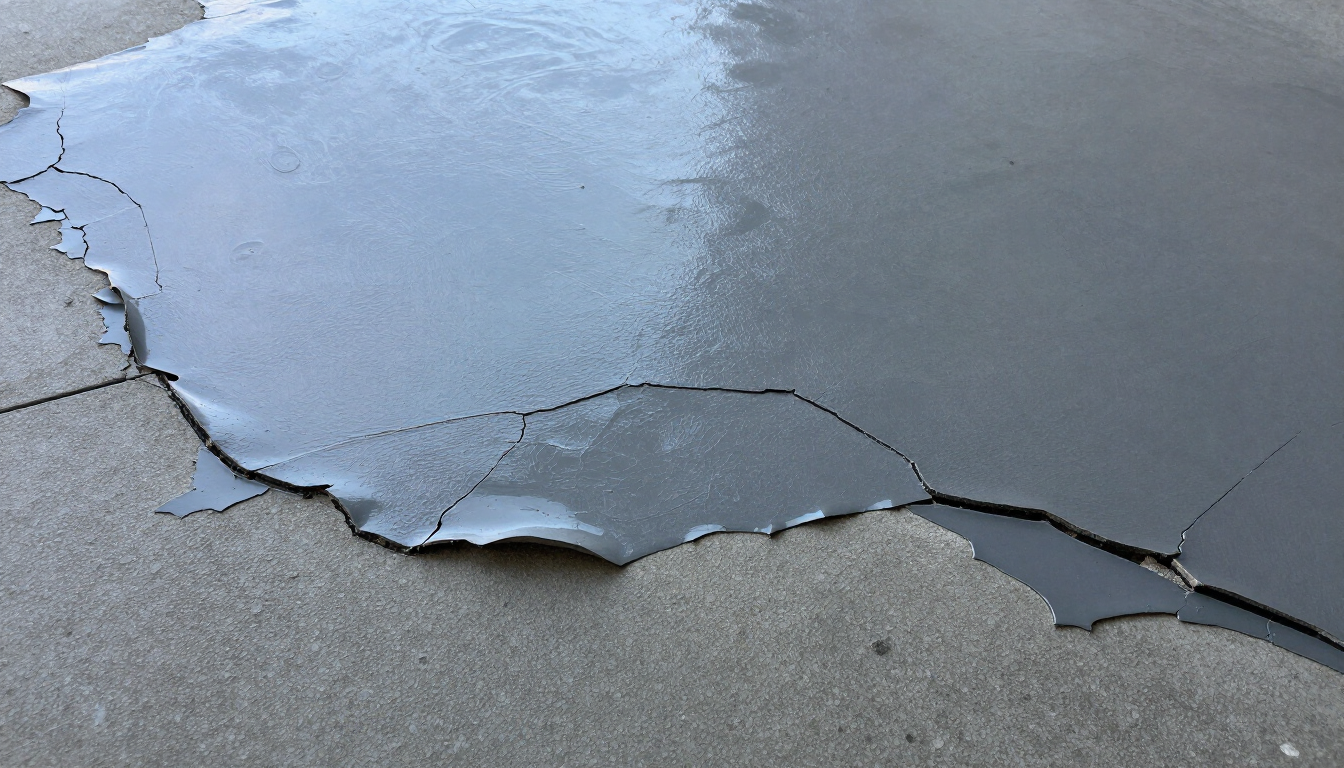
Close up of a failing epoxy floor coating with peeling and cracks.
September 16, 2026
Identify the 5 key signs of an epoxy floor coating failing, including peeling, bubbling, and yellowing. Learn how Greenville Epoxy Flooring rescues failing floors with professional grinding and moisture mitigation.
A high-quality professionally installed epoxy garage floor.
September 9, 2026
Learn the real-world lifespan of epoxy garage floors. We cover substrate prep, polyaspartic topcoats, and how to get 20 years of durability in Greenville, SC.
Comparison of different epoxy flooring systems in a residential setting.
September 4, 2026
Compare flake, metallic, and solid color epoxy flooring systems. Learn which finish is most durable for your Greenville home or business from the experts at Greenville Epoxy Flooring.
A luxury interior with a shimmering metallic epoxy floor featuring deep blue and silver swirls.
August 26, 2026
Learn the technical process behind creating stunning metallic epoxy floor patterns. Discover how pigments, application tools, and chemistry create custom effects.
A professionally installed full flake epoxy garage floor in Greenville, SC.
August 19, 2026
Learn what full flake epoxy flooring is, how it's installed, and why it's the most durable choice for Greenville homeowners' garage and basement floors.
Durable polyaspartic flake floor finish in a Greenville garage
August 12, 2026
Learn exactly how long polyaspartic takes to cure for foot and vehicle traffic. Discover how temperature and humidity affect your garage floor installation timeline.
Professional applying polyaspartic coating to a garage floor.
August 5, 2026
Discover why homeowners and contractors in Greenville are switching from epoxy to polyaspartic coatings for superior durability, UV resistance, and faster cure times.
A modern garage with a high-quality epoxy flake floor coating.
July 29, 2026
Comparing Epoxy vs. Polyaspartic floor coatings for your garage. Learn about durability, cure times, and UV resistance for Greenville, SC homes.