

5 Reasons Commercial Epoxy Flooring Wins in 2026

November 18, 2026

Share this article

Commercial epoxy flooring is a seamless resin-based surface installed over prepared concrete to create a durable, easy-to-clean, and safer work area. Warehouses, shops, and commercial workspaces choose it because it withstands traffic, resists many spills, reflects light, and can be customized for operations in Anderson, Powdersville, and throughout the Upstate.

Commercial epoxy flooring in a bright warehouse

Why do businesses choose commercial epoxy flooring?

A commercial floor has to do more than look finished. It must support employees, equipment, inventory, deliveries, cleaning routines, and changing operating conditions. Coating the concrete with a properly installed epoxy system can address several of those demands at once.

The most important benefits are:

  • Strong resistance to abrasion from foot traffic, carts, pallet jacks, and light equipment
  • A sealed surface that simplifies sweeping, mopping, and spill cleanup
  • Better visibility from light-reflective colors and a continuous, uncluttered finish
  • Custom safety features, including texture, color zoning, and walkway markings
  • A professional appearance suited to customer-facing and production areas

These advantages apply to distribution buildings, automotive shops, fabrication spaces, retail back-of-house areas, offices, and other facilities where concrete must perform every day.

How durable is a commercial epoxy floor?

Durability depends on the coating specification, concrete condition, traffic level, maintenance routine, and installation quality. Epoxy is not a magic layer that hides a weak slab. It performs best when the substrate is mechanically prepared and the system is selected for the actual environment.

A commercial epoxy floor can resist common sources of wear such as:

  1. Repeated pedestrian traffic
  2. Rubber wheels and rolling carts
  3. Dropped tools and moderate impact
  4. Dirt carried into entrances
  5. Many automotive, cleaning, and industrial contaminants

Heavy facilities may need a broadcast flake, quartz, mortar, polyurea, polyaspartic, or polyurethane system rather than a basic thin-film coating. The correct choice depends on impact, chemical exposure, temperature, moisture, and required return-to-service time.

Before installation, the concrete should be evaluated for cracks, joints, contamination, weak areas, and moisture vapor. Grinding typically removes surface laitance and old coatings while opening the concrete profile. Cracks and joints may require repair, and moisture mitigation may be necessary before primer or resin is applied.

For a broader overview of applications, see Commercial Floor Coating and Industrial Epoxy Flooring .

Is epoxy flooring easy to clean and maintain?

Yes. Once properly cured, a seamless epoxy surface has fewer areas for dust, oil, and debris to collect than unfinished or heavily damaged concrete. Routine maintenance usually involves removing loose dirt, addressing spills promptly, and using a cleaner appropriate for the coating system.

A practical maintenance routine includes:

  • Dry sweep or dust mop regularly, especially near loading doors
  • Remove oil, chemicals, and food or beverage spills as soon as possible
  • Use neutral cleaning products rather than harsh chemicals unless approved
  • Place appropriate mats at entrances where grit is tracked inside
  • Inspect high-wear areas, joints, transitions, and drains periodically

The floor still requires care. Abrasive debris can act like sandpaper, and dragged equipment can damage any surface. Businesses should also confirm that cleaning chemicals and process fluids are compatible with the selected coating.

For warehouses with forklifts or frequent pallet movement, cleaning becomes especially valuable. A smooth, sealed floor lets crews identify spills, sweep efficiently, and maintain clearer travel lanes.

Can epoxy make a workspace safer and brighter?

It can support a safer, more visible workspace when the coating design matches the operation. A light-colored or high-gloss finish can reflect more available light than dark, porous concrete. That may make aisles, obstacles, spills, and work areas easier to see, although floor color alone cannot replace proper lighting or safety procedures.

Slip resistance is also a design consideration. A fully smooth coating may be unsuitable where water, oil, dust, or process liquids are present. Fine or broadcast aggregate can add texture without making the floor unnecessarily difficult to clean. The appropriate level should reflect the facility’s exposure and footwear requirements.

Color and line-marking options can help distinguish:

  • Pedestrian walkways from equipment lanes
  • Storage zones from production areas
  • Loading and staging locations
  • Restricted or hazardous sections
  • Emergency access routes

A business in Anderson or Powdersville may want a floor that looks polished for visitors while still supporting warehouse movement and routine cleaning. The visual design should follow the facility’s workflow rather than being selected only for appearance.

Epoxy-coated shop floor with safety markings

Which commercial spaces benefit most?

Epoxy is useful wherever concrete receives regular traffic, needs frequent cleaning, or must present a finished appearance. Common applications include:

  • Warehouses and distribution centers
  • Automotive, equipment, and maintenance shops
  • Manufacturing and light industrial areas
  • Retail stockrooms and service corridors
  • Commercial kitchens and utility rooms
  • Offices connected to production or warehouse space
  • Showrooms, garages, and customer-facing workspaces

The required system may vary between rooms. A front office could use a decorative metallic or solid-color finish, while a warehouse may need a highly textured, impact-resistant system. A shop handling oil and metal parts may need greater chemical and abrasion resistance than a low-traffic storage room.

Epoxy or polyaspartic: which is better for business?

Neither material is universally better. Epoxy is often selected for its adhesion, build thickness, decorative flexibility, and strong bond to properly prepared concrete. Polyaspartic systems can offer faster curing, UV stability, and useful installation advantages when a facility needs limited downtime.

The decision should consider:

| Requirement | Epoxy may fit when | Polyaspartic may fit when | |---|---|---| | Build and customization | A thicker, decorative system is desired | A fast multi-coat system is preferred | | Schedule | The facility can allow curing time | Return to service must be accelerated | | Sun exposure | The floor is primarily indoors | UV exposure is a major concern | | Traffic | The specification supports expected use | Fast installation and durability are priorities | | Substrate condition | Preparation and repairs can be completed first | The same preparation standards are accepted |

Many successful floors use more than one resin technology. For example, an epoxy primer or base coat may be combined with a polyaspartic topcoat. Compare Polyaspartic Floor Coating with the site’s traffic, moisture, exposure, and scheduling requirements instead of choosing from a product label alone.

What should a facility manager evaluate before installation?

A useful evaluation begins with the building, not a color chart. Document how the floor is used during a normal week and identify conditions that may affect adhesion or wear.

Ask these questions:

  1. How many people, carts, forklifts, or vehicles cross the surface each day?
  2. Are oil, chemicals, food products, water, or metal particles present?
  3. Does the slab show cracks, spalling, dusting, old coating failure, or uneven repairs?
  4. Is moisture vapor coming through the concrete?
  5. How much downtime is available for preparation, installation, and curing?
  6. Where are slip resistance, line marking, cove bases, or drainage details needed?

A responsible scope should explain surface preparation, repairs, primer, body coat, broadcast materials, topcoat, edge details, and expected maintenance. It should also identify exclusions, such as moving equipment, correcting structural movement, or resolving an active moisture source.

Preparation is particularly important when replacing a failed coating. Simply covering peeling or contaminated material can transfer the original problem into the new system. Grinding, cleaning, testing, and repairs create the foundation for reliable performance.

Frequently asked questions

Does commercial epoxy flooring work in an active warehouse?

It can, but installation requires controlled access, proper ventilation, curing time, and protection from dust or traffic. The schedule should be divided into workable zones when the facility cannot close completely.

How long does a commercial epoxy floor last?

Service life varies with preparation, system thickness, traffic, chemicals, impact, and maintenance. A correctly specified and installed floor generally lasts longer than a thin coating applied over poorly prepared concrete.

Is epoxy suitable for a shop floor?

Yes, when the system is selected for oil, tools, tires, equipment, and cleaning conditions. Texture and chemical resistance may be more important than a purely decorative finish.

Can an existing failed coating be rescued?

Often, but the existing material must be assessed. Loose coating, contamination, weak concrete, cracks, and moisture may need to be removed or addressed before a new system is installed.

Key takeaways for commercial floors

Commercial epoxy flooring is a practical choice when a business needs a sealed, durable, cleanable, and professional concrete surface. It can improve daily maintenance, support clearer traffic organization, and contribute to a brighter workspace in warehouses, shops, and facilities around Anderson and Powdersville. The best result depends on matching the system to real traffic, chemical exposure, moisture, safety, and downtime requirements. Before choosing a product, evaluate the slab and request a scope that clearly explains preparation, repairs, coating layers, cure time, and maintenance. Then compare epoxy, polyaspartic, or hybrid options based on how the facility actually operates.

Recent Posts

Anti-slip epoxy coatings on a pool deck
November 11, 2026
Learn how anti-slip epoxy coatings improve pool deck and patio safety, drainage, appearance, and durability in hot, humid Greenville, Travelers Rest, and Fountain Inn weather.
Basement epoxy floors after moisture testing and surface preparation
November 4, 2026
Learn why moisture testing and concrete surface preparation determine whether basement epoxy floors last, and how coatings can make damp-prone basements usable.
Epoxy installation with concrete grinding and floor preparation
October 28, 2026
Learn what happens during epoxy installation, from concrete grinding and repairs to coating and cleanup, plus how long a garage floor project takes in Greenville, Greer, and Mauldin.
Epoxy vs polyaspartic garage floor coating comparison
October 21, 2026
Compare epoxy vs polyaspartic garage floors for durability, appearance, cost considerations, and installation in Greenville and Simpsonville, SC.
Professional commercial epoxy flooring in a clean Greenville warehouse.
October 14, 2026
Discover the benefits, technical requirements, and durability of commercial epoxy flooring for Greenville facilities. Learn how to choose the right coating for your space.

Decorative flake outdoor patio coating in Greenville, SC
October 7, 2026
Discover the best outdoor epoxy coatings for SC weather. Learn why polyaspartic systems outlast standard epoxy for Greenville patios and porches in the Upstate climate.
Professional contractor repairing concrete cracks for epoxy flooring installation
September 30, 2026
Learn if you can epoxy over a cracked concrete slab. Discover the professional process for repairing slab damage and choosing the right coating for your Greenville home.
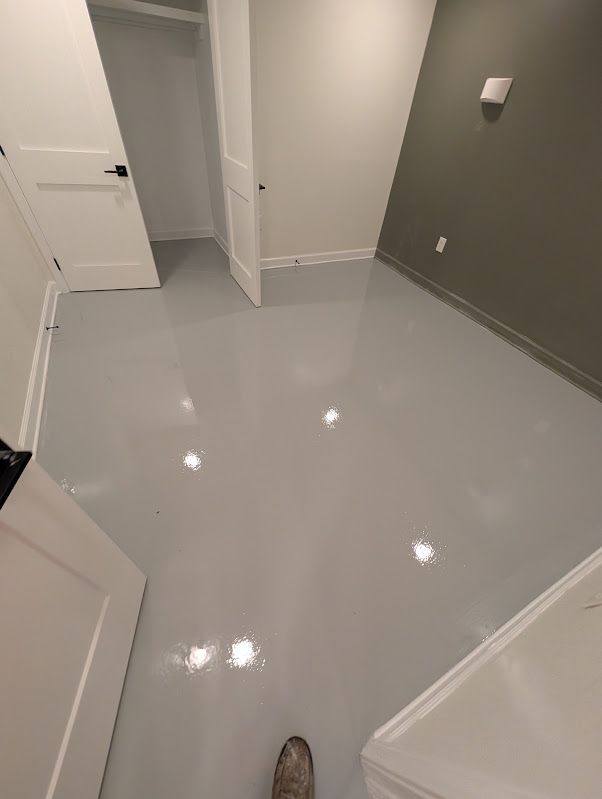
Cleaning a glossy epoxy garage floor with a microfiber mop
September 23, 2026
Discover professional tips on how to clean and maintain an epoxy floor. Learn about the best cleaners, daily care routines, and stain removal for durable garage floors in Greenville, SC.
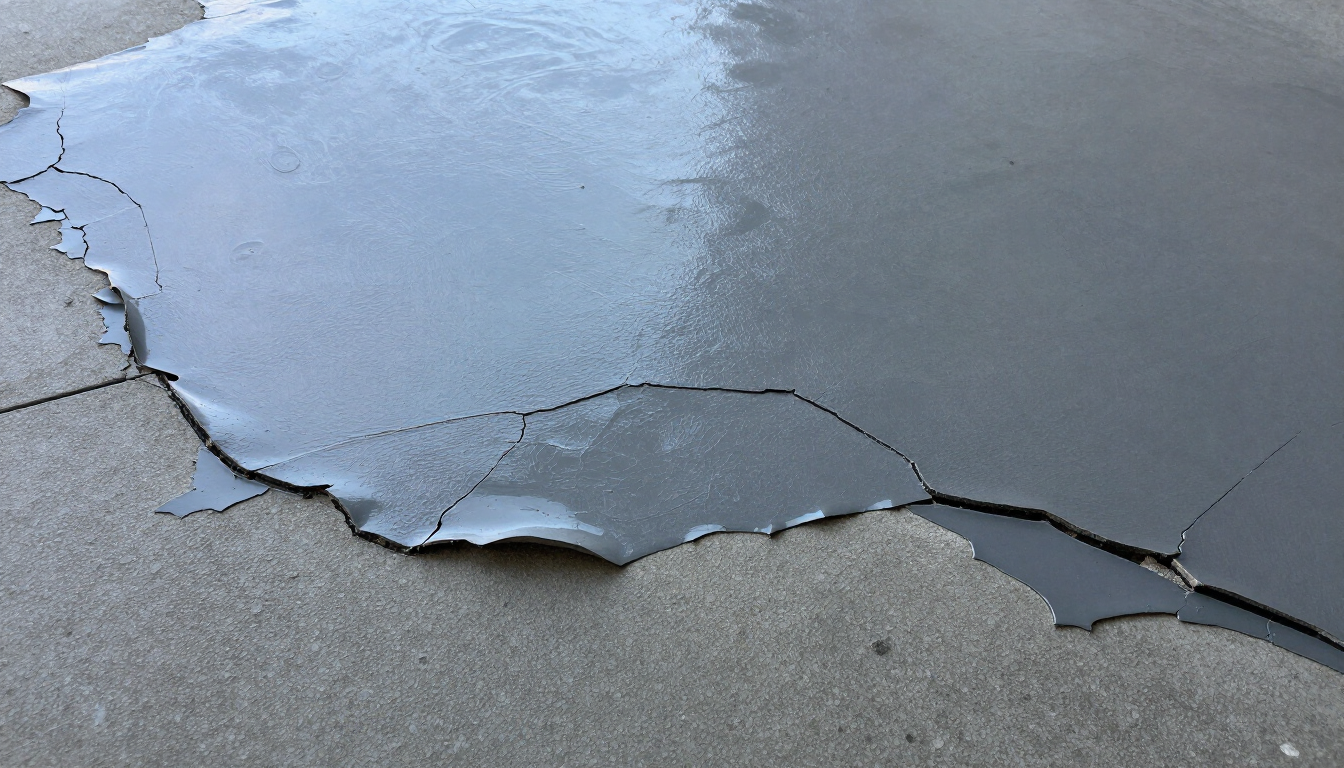
Close up of a failing epoxy floor coating with peeling and cracks.
September 16, 2026
Identify the 5 key signs of an epoxy floor coating failing, including peeling, bubbling, and yellowing. Learn how Greenville Epoxy Flooring rescues failing floors with professional grinding and moisture mitigation.
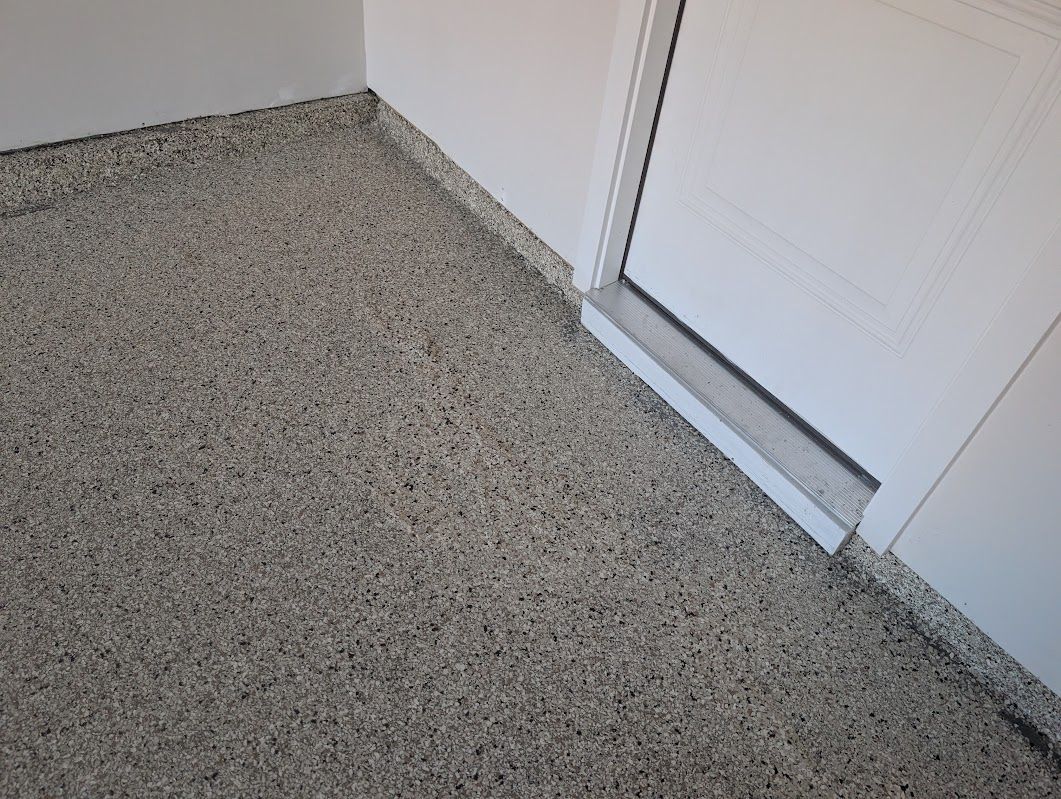
A high-quality professionally installed epoxy garage floor.
September 9, 2026
Learn the real-world lifespan of epoxy garage floors. We cover substrate prep, polyaspartic topcoats, and how to get 20 years of durability in Greenville, SC.

Show More