How Metallic Epoxy Floors Get Their Swirl Patterns

August 26, 2026

Share this article

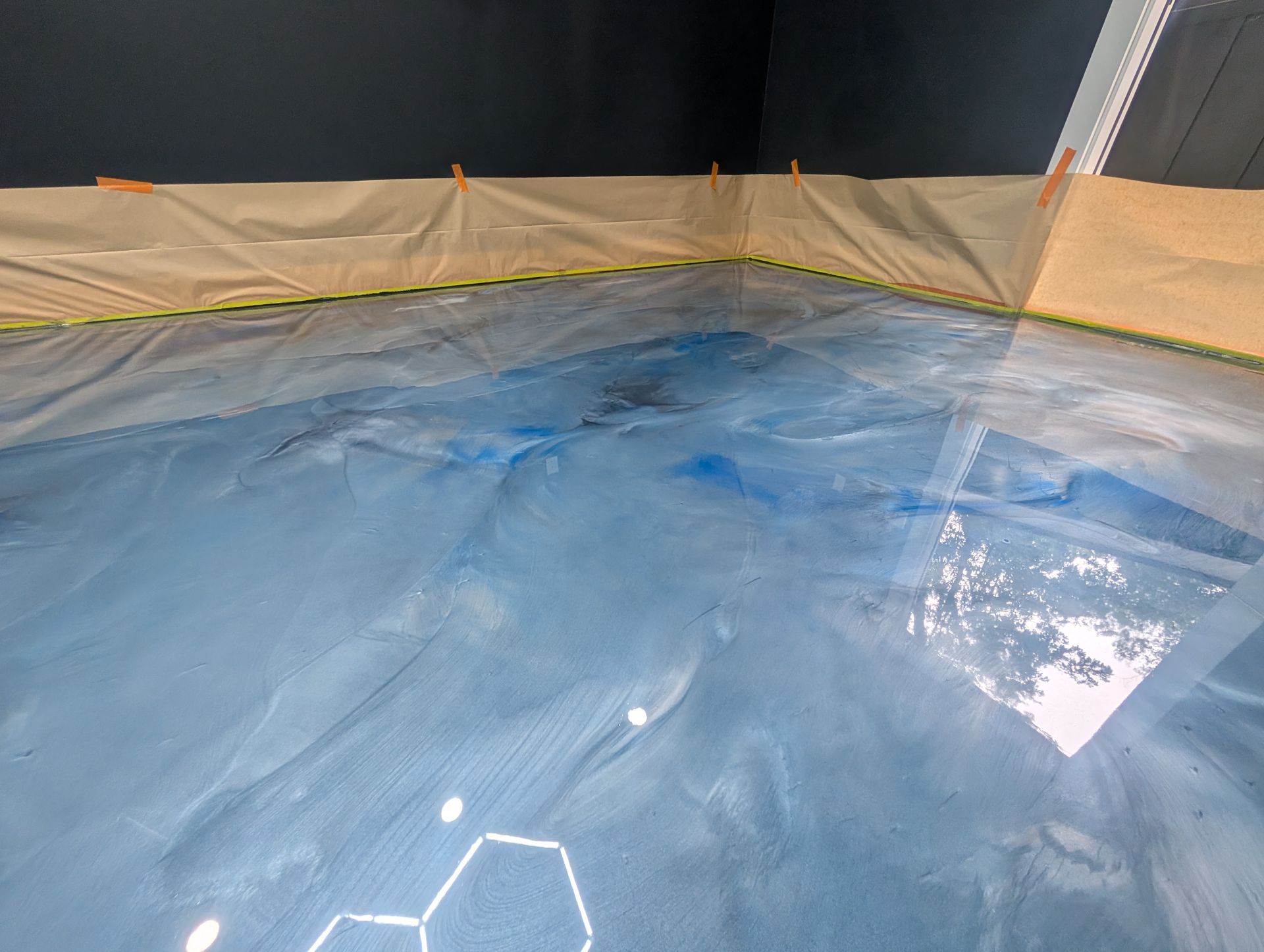
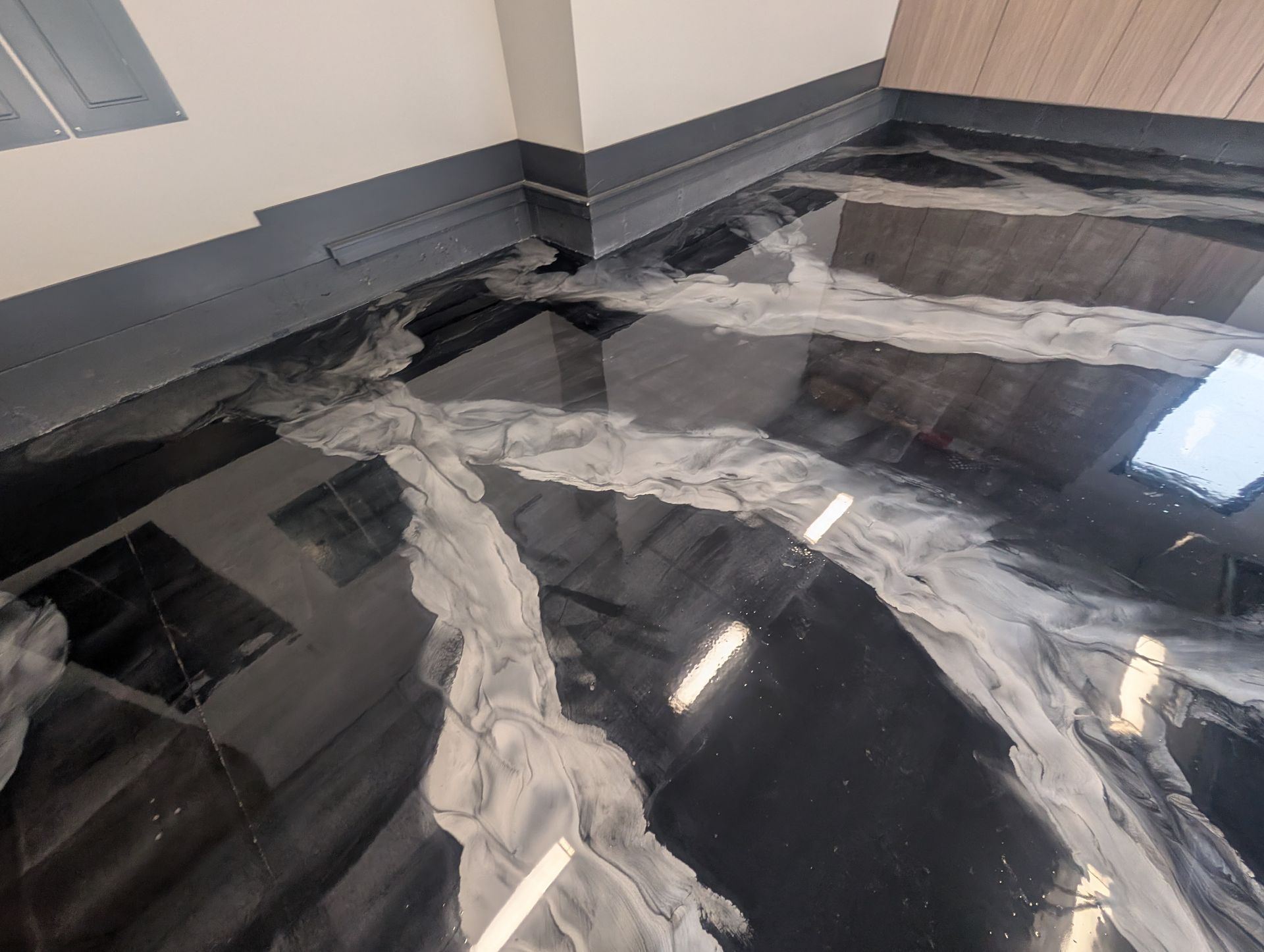
Metallic epoxy floors get their swirl patterns through the suspension of pearlescent metallic pigments within a clear resin binder. As installers manipulate the fluid epoxy using squeegees, rollers, or solvents, these pigments react to mechanical movement and gravity, creating deep, three-dimensional visual effects that lock in place during the curing process.

What gives metallic epoxy its unique movement?

The visual depth of metallic epoxy flooring comes down to the physics of light and the chemical makeup of the coating. Unlike standard solid-color epoxy, which uses opaque pigments to block out the concrete substrate, metallic systems utilize mica nano-particles coated with iron oxide or titanium dioxide. These particles are incredibly small and are suspended in a high-clarity 100% solids epoxy resin. Because the resin remains fluid for a specific window of time—usually 30 to 45 minutes depending on the temperature—the metallic pigments are free to move, shift, and settle.

When light hits a metallic floor, it doesn't just bounce off the surface. It travels through the clear resin and reflects off the varying angles of the suspended mica flakes. This is what creates the "illusion" of movement and depth. When an installer applies the material, they are essentially setting the stage for these particles to orient themselves in different directions. Areas where the pigment is densely packed look darker and deeper, while areas where it is spread thin look lighter and more translucent. This interaction is the foundation of every metallic epoxy flooring project we undertake in the Upstate.

Achieving this look requires a deep understanding of resin viscosity. If the epoxy is too thin, the pigments will simply sink to the bottom and lay flat, resulting in a dull, monolithic appearance. If it is too thick, the pigments won't move at all, and the floor will look "chunky" or overworked. At Greenville Epoxy Flooring, we balance these chemical properties to ensure the "flow" is consistent across the entire surface, whether we are working on a Basement Metallic Epoxy Floor in Greenville, SC or a high-end commercial showroom.

Professional installer applying metallic epoxy floor swirls

How do installers create the actual swirl patterns?

The creation of swirls is a deliberate act of "controlled chaos." While the pigments do some of the work themselves through natural convection currents within the curing resin, the installer uses several specialized tools to guide the aesthetic. The process begins with the base coat—usually a solid black or dark primer—which provides the necessary backdrop to make the metallic colors pop. Once the metallic mid-coat is poured onto the floor in ribbons or puddles, the craftsman goes to work.

Common tools used to manipulate the pattern include:

  • Magic Squeegees: These flexible blades allow the installer to pull the epoxy in long, sweeping arcs or tight circles without leaving harsh lines.
  • Notched Rollers: Used to distribute the material evenly before the swirling begins, ensuring there are no "thin spots" that might ruin the effect.
  • Loop Rollers: These help break up the surface tension and can create a more stippled or "lava" look rather than smooth flows.
  • Small Brushes: For detailed work around edges and corners where larger tools cannot reach.
  • Blowers or Heat Guns: Used sparingly to push the epoxy around using air pressure, creating "cells" similar to what you see in fluid acrylic art.

Every movement made by the installer is captured by the pigment. If a squeegee is pulled in a figure-eight motion, the mica flakes will align along that path. Because the epoxy is self-leveling, the surface stays flat, but the internal pigments remain in those curved formations. This is why a residential epoxy flooring installation featuring metallic pigments looks so much more dynamic than a standard flake floor; you are seeing the literal path of the craftsman's hand captured in resin.

Techniques for Advanced Effects

Beyond the basic manipulation with a squeegee, there are advanced "disruptor" techniques that create the high-end looks homeowners often request for an Interior Epoxy Floor in Greenville, SC . One of the most common methods involves the use of solvents like denatured alcohol or 99% isopropyl alcohol. When these solvents are misted or dripped onto the wet epoxy, they cause a localized reaction that pushes the metallic pigments away from the point of impact. This creates "craters," "veins," or "hammered" effects that look remarkably like natural stone or galactic nebulae.

Another advanced technique involves multi-color “dirty pours.” Instead of applying one color and then another, the installer might mix three or four different metallic shades in separate containers and then pour them onto the floor simultaneously. As the colors bleed into one another, the installer uses a light touch to swirl them just enough to blend the edges without turning the entire floor into a muddy, singular color. This requires a high level of technical skill, as over-manipulating the floor can quickly ruin the distinctness of the individual colors.

We also consider the “base coat influence.” A silver metallic pigment poured over a black base coat will look vastly different than the same silver poured over a white base coat. The black base adds shadows and depth, making the swirls appear more dramatic and three-dimensional. A white base coat makes the floor look brighter and more like polished marble. This level of customization is what makes metallic systems a premier choice for those seeking a one-of-a-kind finish.

Why do no two metallic floors look the same?

It is technically impossible to replicate a metallic epoxy floor exactly. Even if the same installer uses the same colors, tools, and techniques on two different days, the results will vary. This is due to several environmental variables that affect how the epoxy flows and how the pigments settle. In the Upstate, humidity and slab temperature play massive roles in the final outcome. A slab that is slightly warmer will cause the epoxy to cure faster, giving the installer less time to work the swirls and resulting in a more "fixed" or "tight" pattern.

Other factors contributing to uniqueness include:

  • Concrete Porosity: Even after grinding, some areas of the concrete may absorb the primer differently, affecting how the top layers sit.
  • Airflow: Even a slight breeze from an HVAC vent can move the surface of the epoxy, creating unexpected ripples.
  • Pigment Load: The ratio of metallic powder to resin determines the opacity and the "weight" of the swirls.
  • Application Speed: The faster the material is laid down, the more "flow" it generally retains.
  • Substrate Leveling: If a floor has a very slight pitch, the epoxy will naturally migrate toward the low point, stretching the swirls as it moves.

This inherent variability is why we tell our clients that metallic flooring is an art form, not a manufacturing process. When you choose a metallic system, you aren't just buying a floor; you are commissioning a large-scale piece of functional art that is permanently bonded to your home's foundation.

High-end metallic epoxy basement floor with gold and bronze swirls

The Role of Substrate Prep in Final Aesthetics

While the swirls get all the attention, the technical success of a metallic floor depends entirely on what happens before the first drop of resin hits the ground. At Greenville Epoxy Flooring, we focus heavily on the preparation phase. Because metallic epoxy is translucent, any imperfections in the concrete—cracks, divots, or uneven grind marks—can potentially telegraph through the finish. We utilize industrial planetary grinders to open the pores of the concrete, ensuring a mechanical bond that prevents peeling or delamination.

After grinding, we perform extensive crack filling and joint repair. If a joint isn't treated properly, the metallic epoxy might sink into it, causing a visible line that breaks the continuous flow of the swirl pattern. We also test for moisture vapor transmission. If moisture is rising through the slab, it can create bubbles (osmotic blistering) that will ruin the glass-like finish of a metallic floor. In these cases, we apply a specialized moisture-mitigating primer to lock out the dampness before proceeding with the decorative layers.

What is the difference between metallic epoxy and standard flake?

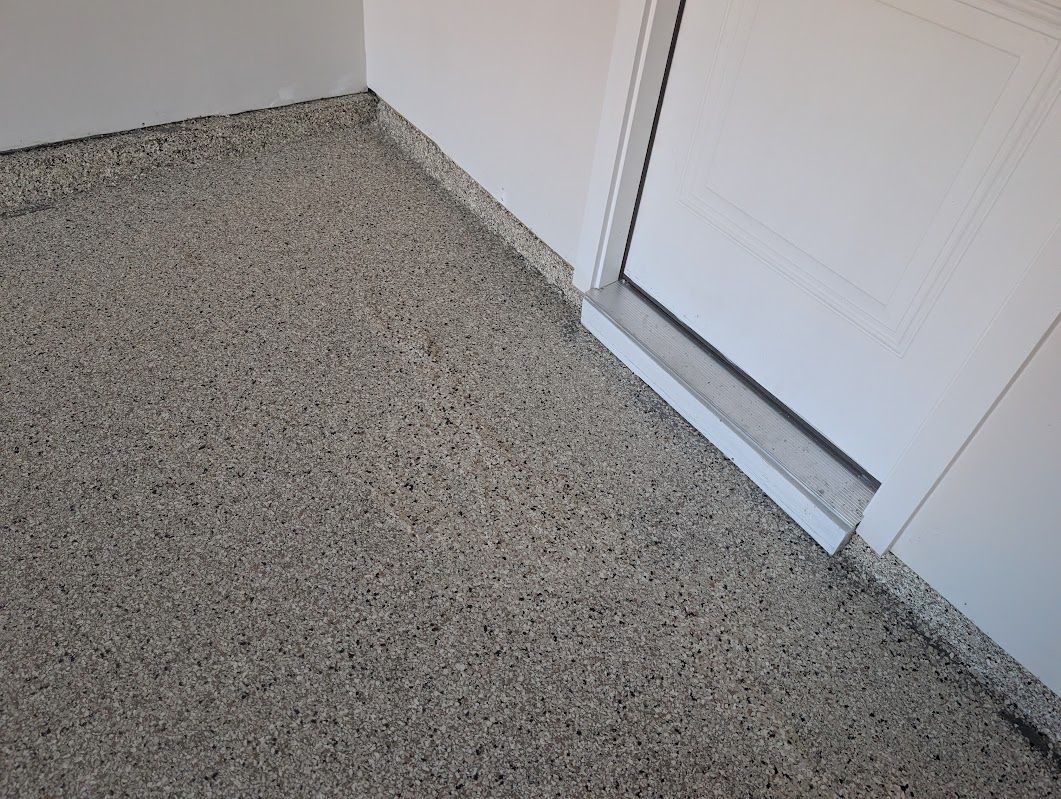
Homeowners often ask how metallic systems compare to the more common "flake" or "chip" floors seen in many garages. The primary difference is the aesthetic intent and the physical texture. A flake floor, which often uses a polyaspartic floor coating for its top layers, is designed for maximum durability, slip resistance, and hiding power. The vinyl flakes create a multi-colored, textured surface that is excellent at masking salt, dirt, and minor concrete imperfections.

Metallic epoxy, on the other hand, is about visual impact and smoothness. While it is just as durable as a flake system when protected with a high-quality top coat, it offers a completely different vibe. Metallic floors are usually smoother and have a mirror-like gloss that reflects light in a way that flakes simply cannot. Flake floors are the "workhorses," ideal for heavy-duty garages, while metallic floors are the "showpieces," better suited for basements, retail spaces, and interior living areas where the goal is to make a statement.

Conclusion: Selecting Your Custom Swirl Style

Creating the perfect metallic epoxy floor is a balance of high-grade chemistry and artisan technique. By manipulating pearlescent pigments within a fluid resin, installers can create custom patterns that mimic natural stone, flowing water, or abstract art. Because the process is so dependent on the installer's hand and the specific conditions of the room, every floor is a unique masterpiece that can never be perfectly duplicated.

Key Takeaways for Homeowners:

  • Depth and Dimension: Swirls are created by light reflecting off suspended mica pigments at different angles.
  • Hand-Crafted Design: Installers use squeegees, rollers, and air to manually guide the pattern before it cures.
  • Unique Results: No two floors are identical due to environmental factors like temperature and airflow.
  • Preparation Matters: A smooth, moisture-free substrate is essential for the glass-like finish of a metallic floor.
  • Visual Impact: Metallic systems offer a high-gloss, three-dimensional look that standard flake floors cannot match.

If you are ready to transform your space with a custom-designed floor, evaluate your color preferences and consider how the natural lighting in your room will interact with the metallic flow. Whether you want subtle, marble-like veins or bold, high-contrast swirls, metallic epoxy provides a durable and stunning solution for any Greenville home.

Recent Posts

A professionally installed full flake epoxy garage floor in Greenville, SC.
August 19, 2026
Learn what full flake epoxy flooring is, how it's installed, and why it's the most durable choice for Greenville homeowners' garage and basement floors.
Durable polyaspartic flake floor finish in a Greenville garage
August 12, 2026
Learn exactly how long polyaspartic takes to cure for foot and vehicle traffic. Discover how temperature and humidity affect your garage floor installation timeline.
Professional applying polyaspartic coating to a garage floor.
August 5, 2026
Discover why homeowners and contractors in Greenville are switching from epoxy to polyaspartic coatings for superior durability, UV resistance, and faster cure times.
A modern garage with a high-quality epoxy flake floor coating.
July 29, 2026
Comparing Epoxy vs. Polyaspartic floor coatings for your garage. Learn about durability, cure times, and UV resistance for Greenville, SC homes.